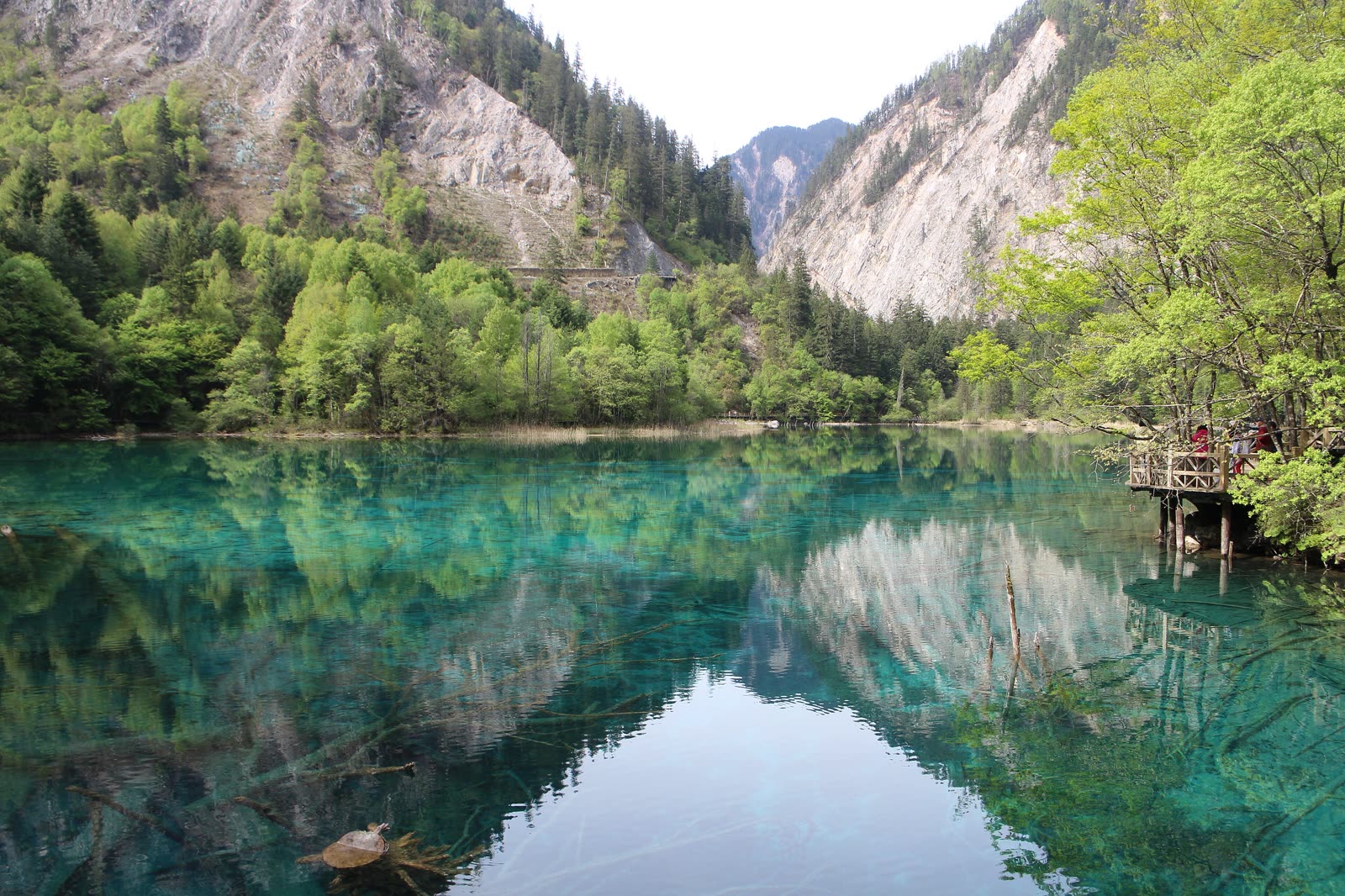
Five-Flower Lake
The most celebrated lake in the valley. The same sheet of water shifts through pale yellow, deep green, navy and indigo as the light moves, and the travertine bed and fallen trees are visible far below the surface. This is the first stop for photographers — the side light in the morning brings out the most layers of colour.
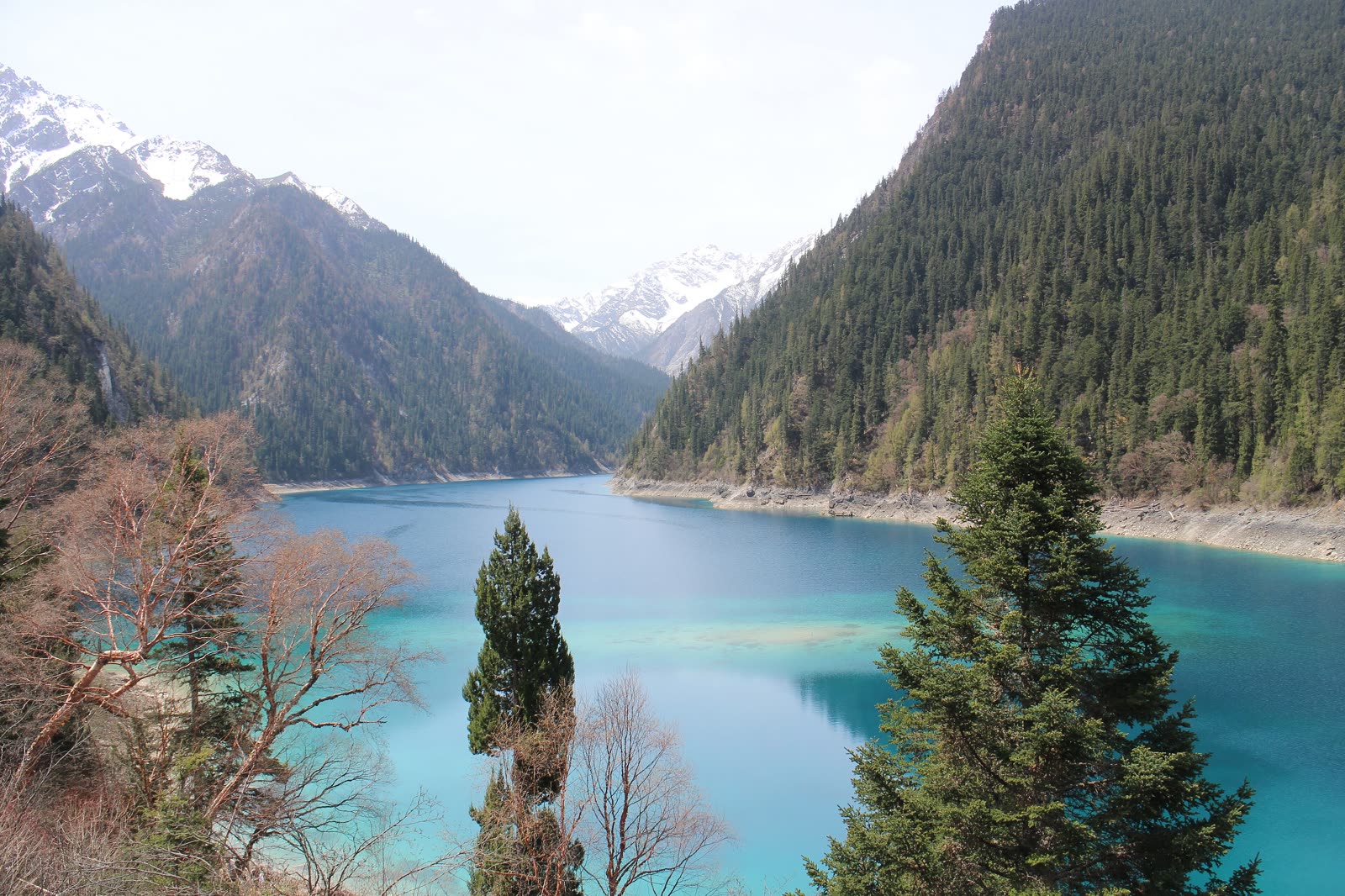
Long Lake
At over 3,100 m, this is the largest lake in the valley, inky blue and ringed by snow peaks. When it freezes in winter the scene takes on a different grandeur. It sits at the head of Zechawa Valley and is usually visited on the same run as Five-Color Pond.
Five-Color Pond
A small lake at the very end of Zechawa Valley, modest in size but the most brilliant colour in the park — it is often called Jiuzhaigou's gem. The water is shallow, and the travertine floor and aquatic plants separate the colours into distinct bands.
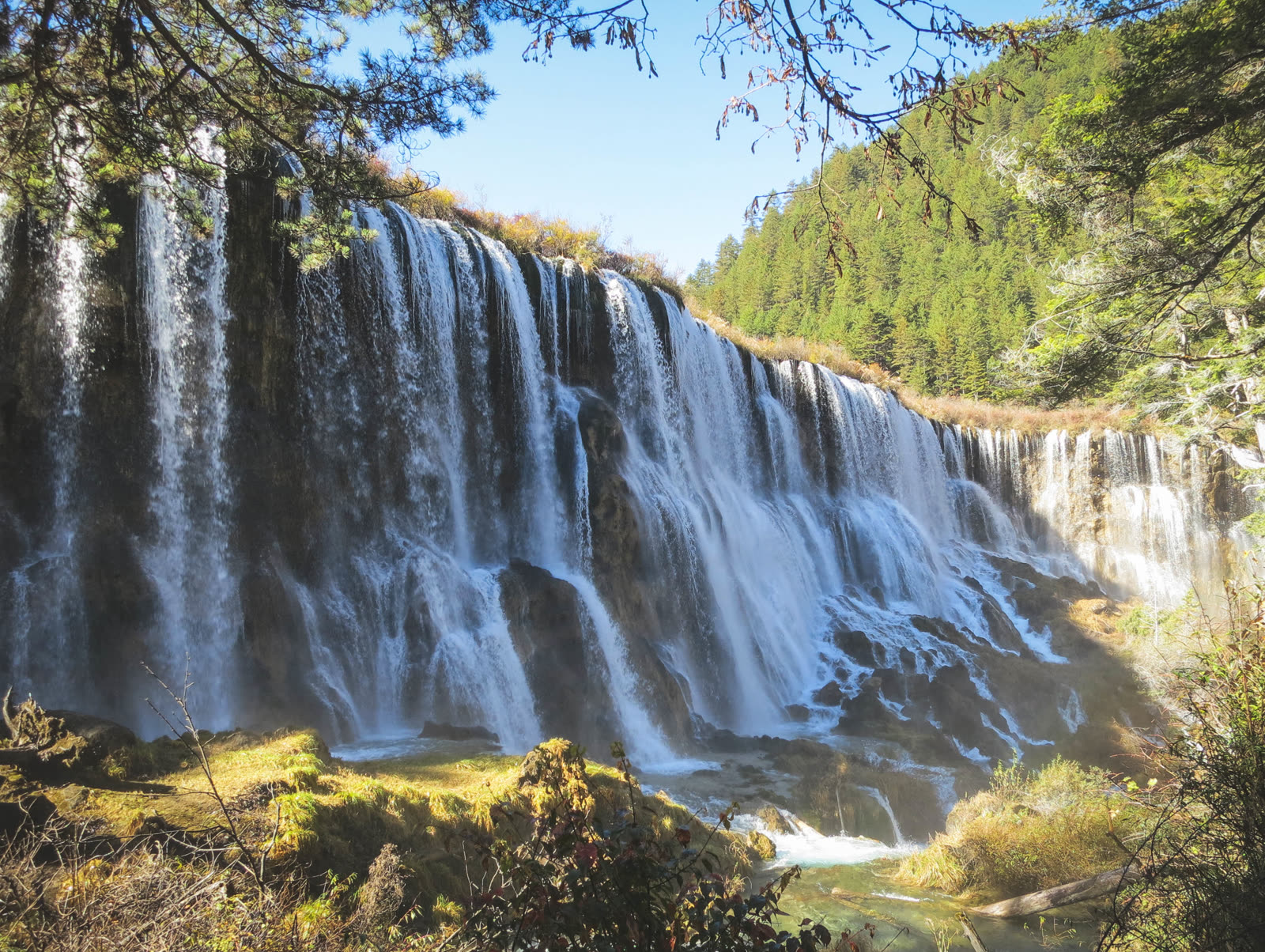
Nuorilang Waterfall
The widest travertine waterfall in China, about 270 m across, with water that fills the valley with sound. It stands where the three main valleys meet and doubles as the park's transfer hub, so almost every itinerary passes through it.
Pearl Shoal Waterfall
The water is split into countless threads by potholes in the travertine shelf, falling away in the sun like scattered pearls — the most varied water form in the valley. The boardwalk runs across the shoal, so you can look at it from several angles.
Stopping and shooting
The five sights sit in different valleys, so work from the top down: with the best light and thinnest crowds in the morning, start in upper Rize Valley for Five-Flower Lake and Pearl Shoal; have lunch at Nuorilang; then tour Zechawa Valley for Long Lake and Five-Color Pond in the afternoon; finally leave through Shuzheng Valley. There is a lot of walking — wear light, non-slip shoes.