Why visit Jiuzhaigou
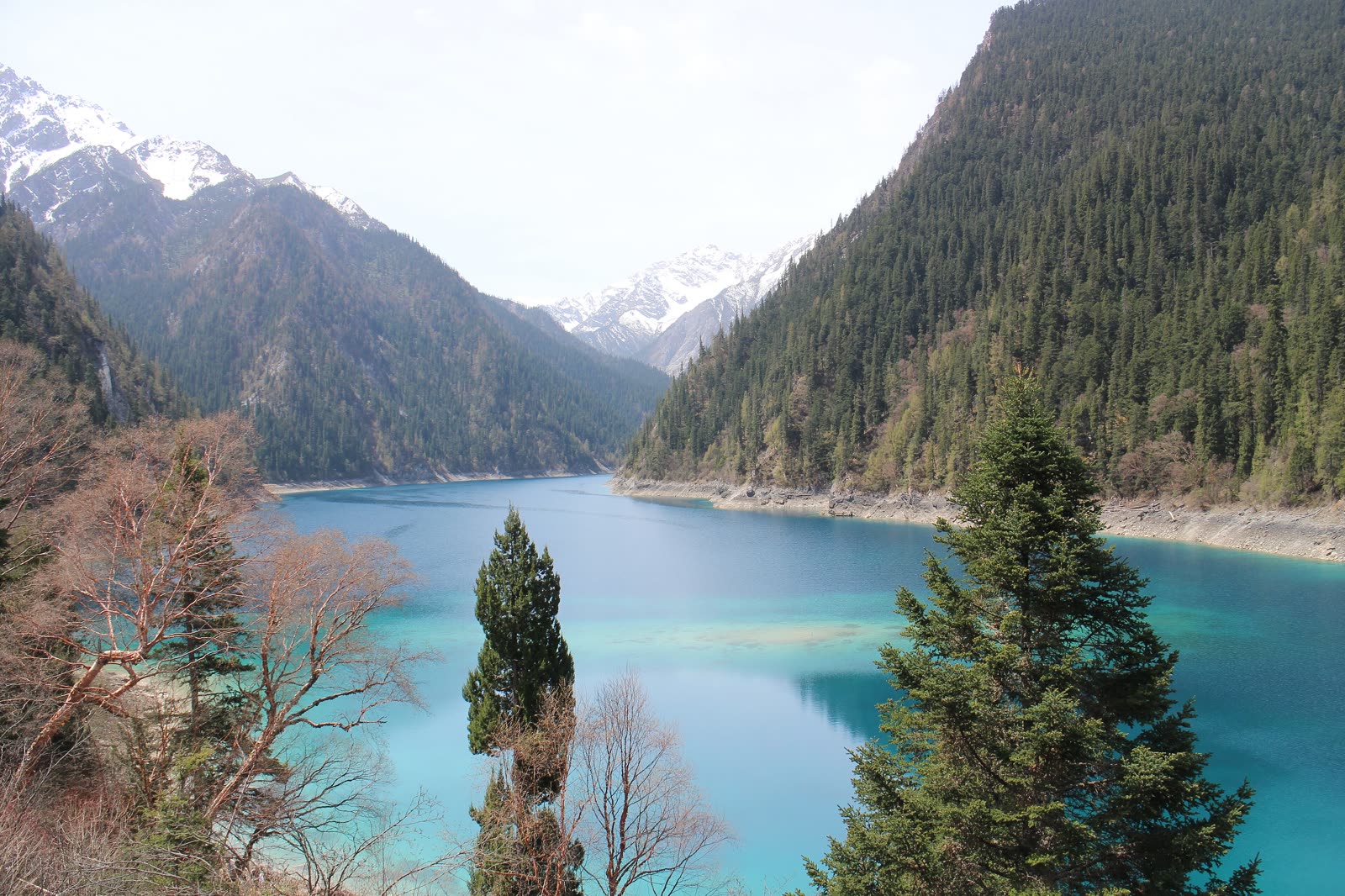
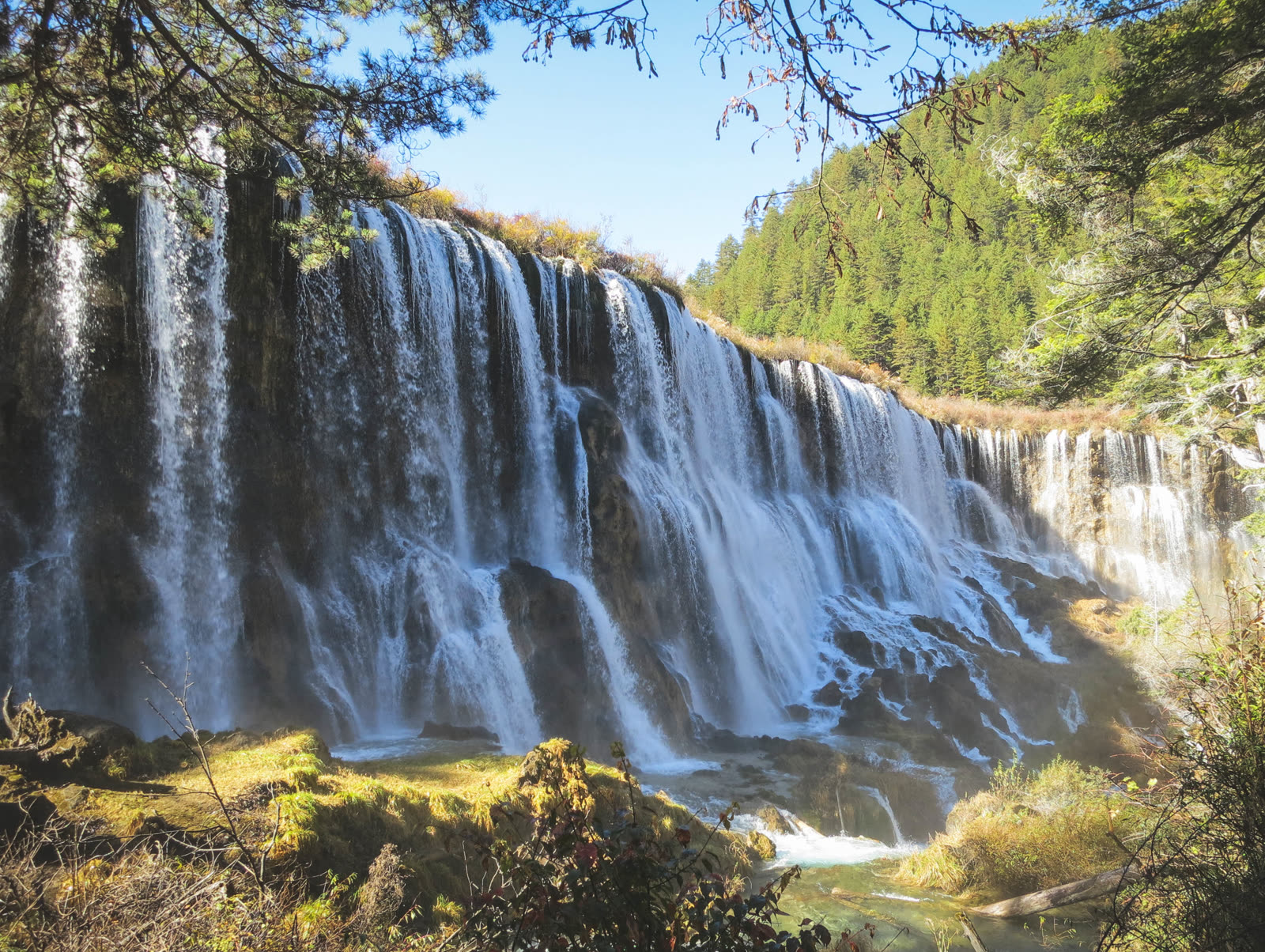
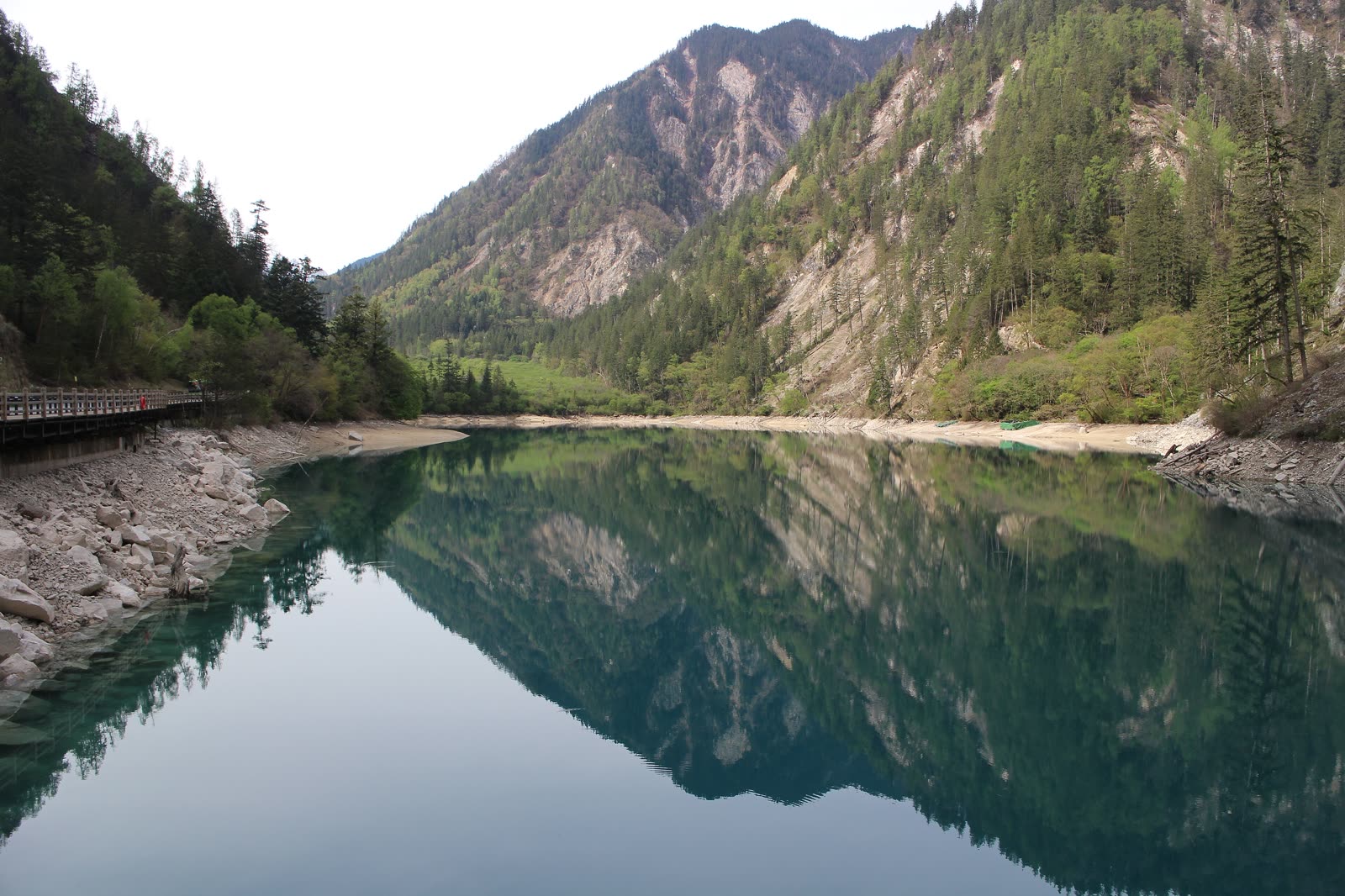
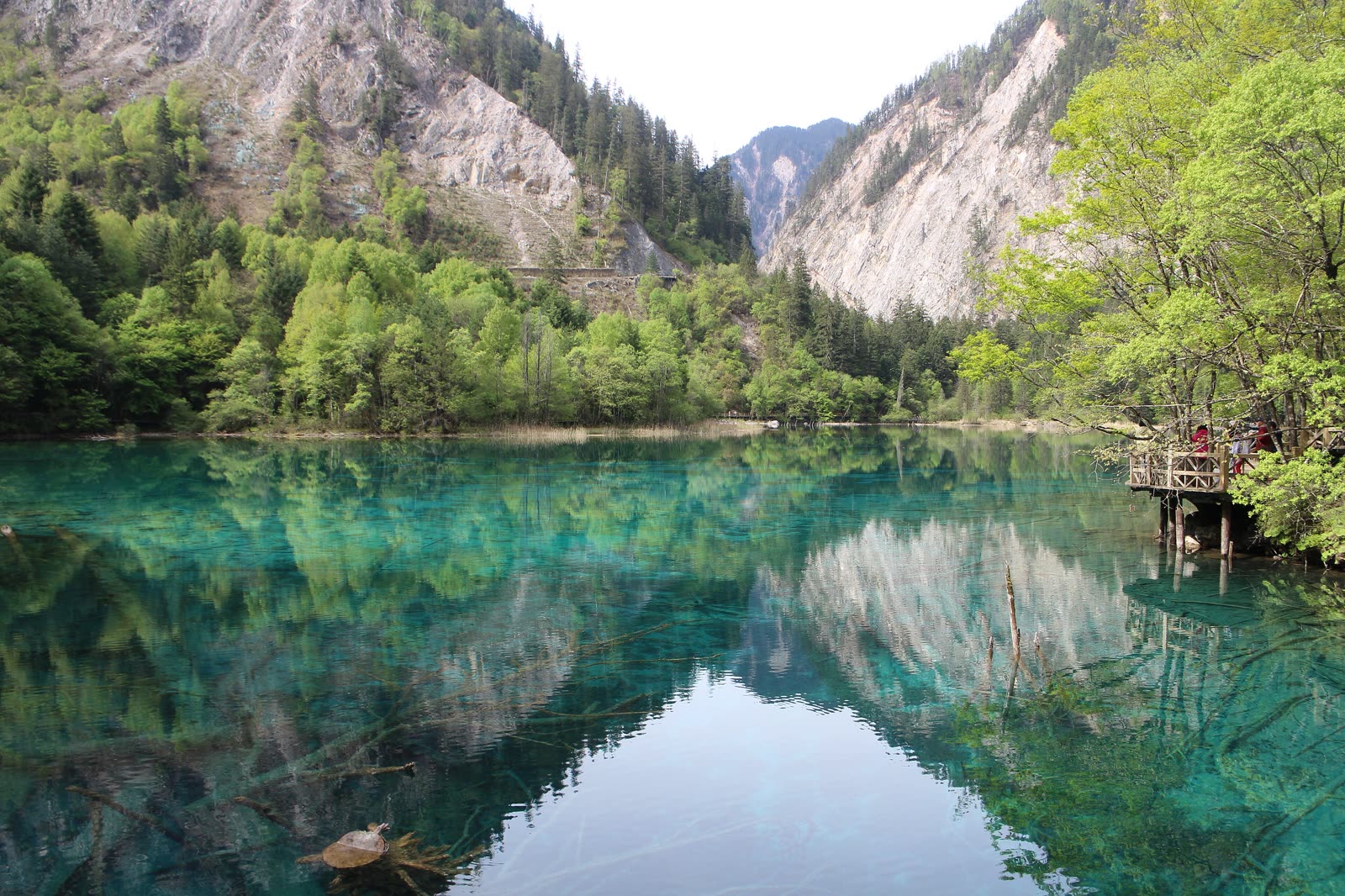
Jiuzhaigou is a deep valley in the Minshan Mountains of northern Sichuan. It takes its name from the nine Tibetan villages that have long stood inside the valley, and it was inscribed on the UNESCO World Heritage List in 1992. The valley is shaped like a letter Y, formed by three main valleys — Shuzheng, Rize and Zechawa — meeting at Nuorilang. More than a hundred travertine lakes (called "haizi" locally) and a series of terraced waterfalls fill the valley, and the water shifts between blue, green, teal and indigo depending on the travertine deposits, aquatic plants and the angle of the light.
Highlights
- Emerald lakes: Five-Flower Lake, Five-Color Pond, Mirror Lake and Arrow Bamboo Lake — clear to the bottom, with crisp reflections.
- Terraced waterfalls: Nuorilang, Pearl Shoal and Shuzheng, dropping step by step over travertine terraces.
- Autumn forest and snow peaks: the hills turn red and gold in autumn, with snow-capped ridges in view year round.
- Blue ice: in winter the lakes freeze and the ice glows deep blue — a sight unique to Jiuzhaigou.
- Tibetan villages: Shuzheng and Heye villages, with traditional houses and water mills.
Layout and pace
The park runs on a shuttle-bus plus boardwalk system: buses travel the main valleys and visitors step off at stops to walk the boardwalks. Elevation rises from about 2,000 m at the entrance to about 3,100 m near Long Lake, so take it slowly and avoid rushing. Allow a full day for the main sights; with only half a day, focus on Nuorilang Waterfall, Five-Flower Lake and Pearl Shoal.